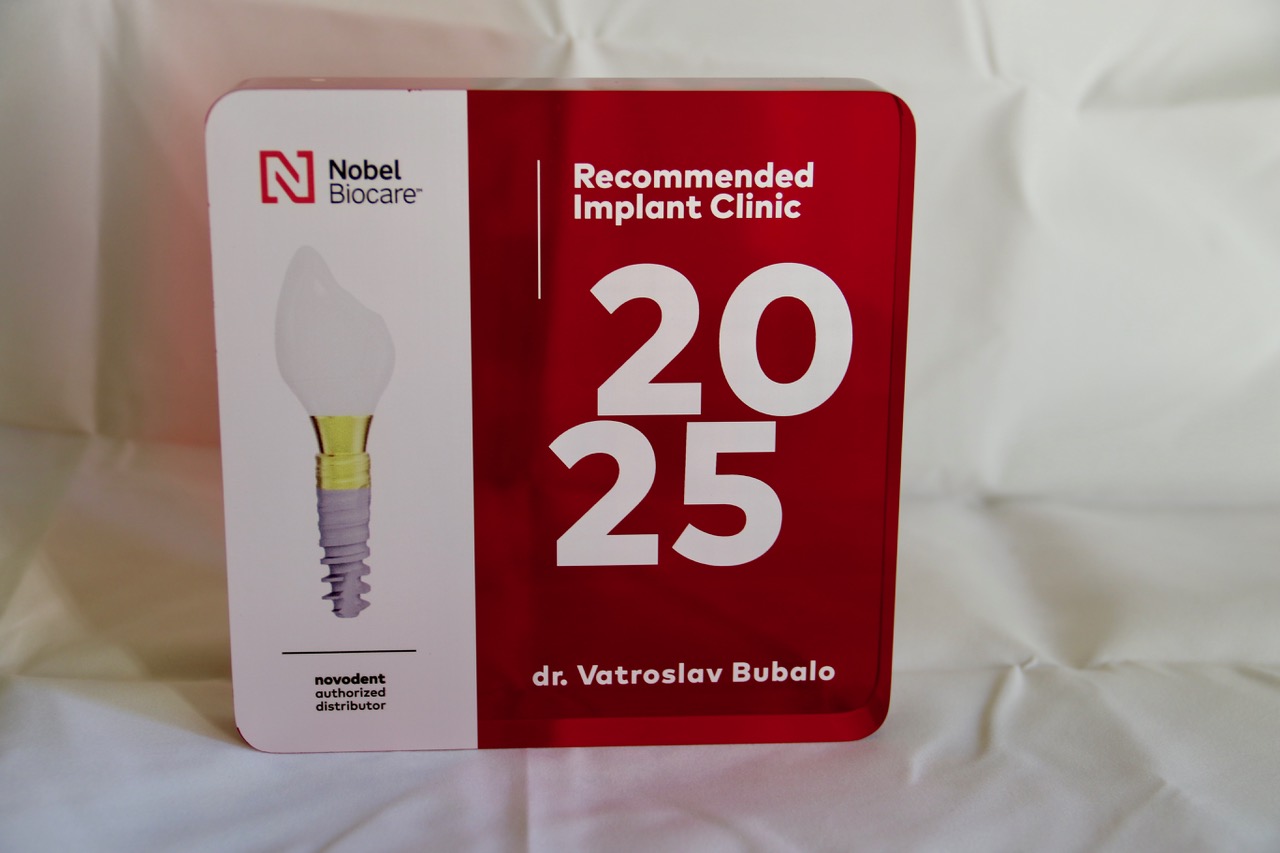
Nobel Biocare
Recommended Implant Clinic 2025
Nobel Biocare, the world's leading manufacturer of dental implants, has awarded the practice of Dr. Vatroslav Bubalo the Recommended Implant Clinic distinction for 2025.
The award confirms the use of original Nobel Biocare implants together with continuous professional education.
What Are Dental Implants?
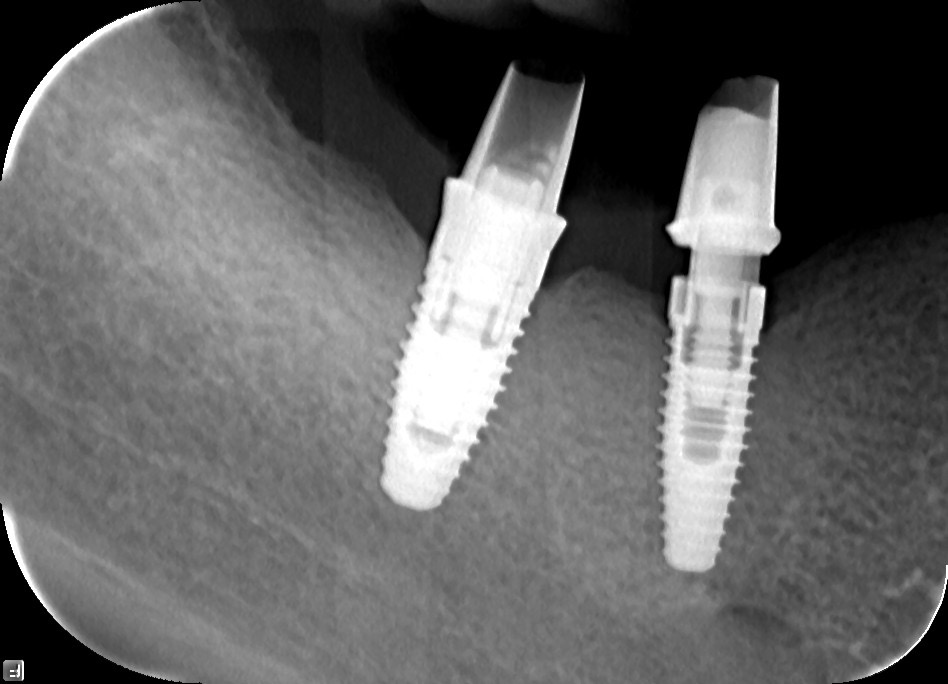
Dental implants are titanium screws surgically placed into the jawbone to serve as artificial tooth roots. Crowns, bridges, or dentures are then mounted on them, creating a functional and aesthetic replacement for missing teeth. Titanium is a biocompatible material that fuses with the bone through a process called osseointegration, making the implant a solid anchor for the prosthetic restoration.
Dental implants are the most reliable method for replacing missing teeth because they most closely replicate a natural tooth in both function and appearance.
The Implant Procedure
Dental implant placement in our practice follows several stages:
Diagnostics and planning: a thorough analysis of the bone, teeth, and soft tissues using digital radiography. Based on the findings, a precise treatment plan is developed with optimal implant positioning.
Surgical placement: the implant is inserted into the jawbone under local anaesthesia. The procedure is minimally invasive and typically painless.
Osseointegration: a period of 3 to 6 months during which the implant fuses with the bone. In the meantime the patient wears a temporary restoration.
Prosthetic rehabilitation: once osseointegration is complete, an abutment and permanent crown, bridge, or denture is placed on the implant. Prosthetic rehabilitation on implants is our core specialty and is key to the long-term success of the treatment.
Benefits of Dental Implants
Dental implants offer several advantages over conventional prosthetic methods for replacing missing teeth:
Bone preservation: the implant stimulates the jawbone just like a natural tooth root, preventing the bone resorption that occurs after tooth loss.
Protection of adjacent teeth: unlike bridges, implants do not require grinding down healthy neighbouring teeth.
Natural feel: implants function and look like your own teeth, allowing unimpeded chewing, speaking, and smiling.
Durability: with proper oral hygiene and regular check-ups, implants can last for decades or even a lifetime.
Denture stability: implants provide a secure anchor for dentures, eliminating problems with rocking and uncomfortable adhesives.
Improved quality of life: patients with implants enjoy food again, speak clearly, and feel confident in everyday life.